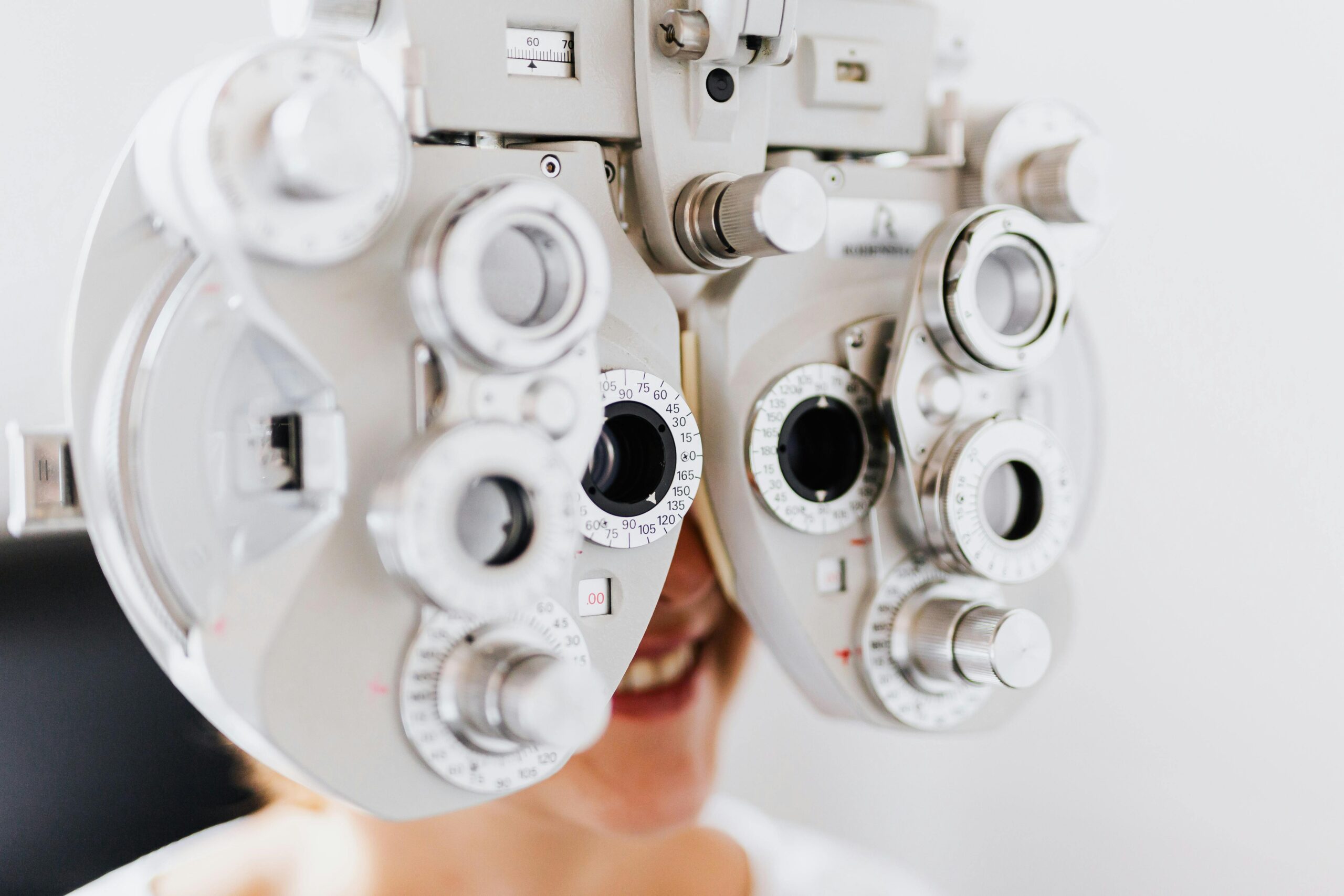
When was the last time you thought about what’s actually happening behind your eyes? Most of us view an eye test as a simple “Which is better, one or two?” routine to update a prescription. However, at Oakes Opticians, we believe a comprehensive eye exam is much more, it is a vital window into your neurological and cardiovascular health.
Whether you’ve noticed a slight blur when reading or your vision feels crystal clear, a thorough examination is about preservation, not just correction. Here is everything included in a truly comprehensive eye exam and why every step matters.
1. Clinical History and Lifestyle Discussion
A great eye exam doesn’t start with a machine; it starts with a conversation. Your optometrist will discuss your medical history, any family history of eye conditions (like glaucoma or macular degeneration), and your daily habits.
Do you spend eight hours a day in front of a computer? Do you drive frequently at night? These details allow us to tailor the exam to your specific needs, ensuring we aren’t just checking boxes but solving the visual challenges of your actual life.
2. Visual Acuity and Refraction
This is the part most people are familiar with, the “Snellen Chart.” We measure how clearly each eye can see at a distance and up close.
- Visual Acuity: Determining the smallest letters you can read to establish your “baseline” vision.
- Refraction: the process of fine-tuning your prescription. By testing various lens combinations, we pinpoint the exact correction needed to address nearsightedness (myopia), farsightedness (hypermetropia), or astigmatism.
3. Binocular Vision and Eye Muscle Coordination
Your eyes are a team. If they don’t work together perfectly, you might experience headaches, double vision, or “digital eye strain.” We test your eye alignment and “teaming” to ensure both eyes are focusing and moving in sync. This is particularly crucial for children, where undiagnosed coordination issues can mimic learning difficulties or ADHD symptoms.
4. The Slit-Lamp Examination (The Microscope)
Using a high-powered microscope called a slit lamp, your optometrist examines the physical structures of your eye under intense magnification. This includes:
- The Cornea and Iris: Checking for scratches, infections, or signs of dry eye disease.
- The Lens: Looking for the early formation of cataracts (clouding of the lens).
- The Eyelids: Ensuring there is no inflammation or blocked oil glands (blepharitis), which can lead to chronic discomfort.
5. Intraocular Pressure (Tonometry)
While many people remember the “puff of air” test, measuring the intraocular pressure is one of the most effective ways to screen for Glaucoma. Glaucoma is often called the “silent thief of sight” because it usually has no symptoms until permanent vision loss has occurred. Regular pressure checks are your first line of defence against optic nerve damage.
6. Retinal Health and Advanced Imaging (OCT)
At Oakes Opticians, we pride ourselves on investing in the latest technology. A comprehensive exam involves looking at the back of the eye—the retina, optic nerve, and blood vessels.
- Optical Coherence Tomography (OCT): Think of this as an “ultrasound for the eye.” It takes a 3D cross-section of your retina, allowing us to see beneath the surface layers. This can detect signs of Diabetes, High Blood Pressure, and Macular Degeneration years before they impact your vision.
Why a “Quick” Check Isn’t Enough
A basic sight test might give you a prescription for glasses, but a comprehensive exam at Oakes Opticians protects your overall well-being. Many systemic health issues show their first warning signs in the small blood vessels of the eye. By the time the exam is finished, your optometrist has checked for:
- Neurological issues via pupil response and optic nerve health.
- Cardiovascular health can be assessed by observing the condition of the retinal arteries and veins.
- Chronic conditions like diabetes can cause leaking vessels (diabetic retinopathy) in the back of the eye.
The Importance of Frequency
While the general guideline suggests an exam every two years, we often recommend annual checks for:
- Children: Their eyes change rapidly during the school years, which impacts their development.
- Adults over 60: To monitor for age-related conditions like cataracts and macular degeneration.
- Diabetics: To ensure early detection of any retinal changes.
- Contact Lens Wearers: To ensure the cornea isn’t being compromised.
Experience the Oakes Opticians Difference
At Oakes Opticians, we don’t just “test” eyes, we care for people. Located in the heart of Huddersfield at the Salendine Shopping Centre, our family-owned practice combines over 20 years of expertise with a warm, patient-first approach.
We offer longer-than-average appointment times so you never feel rushed, and we utilise state-of-the-art diagnostic tools to ensure no detail of your health is overlooked. Whether you’re due for your NHS-funded check-up or looking for a bespoke private examination, our team is here to help you see the world clearly.
Ready to prioritise your vision? * Visit Us: Salendine Shopping Centre, 144 Moor Hill Road, Huddersfield, HD3 3XA
- Call Our Team: 01484 652670
- Email: hello@oakesopticians.co.uk
Book your comprehensive eye exam today and give your eyes the expert care they deserve.